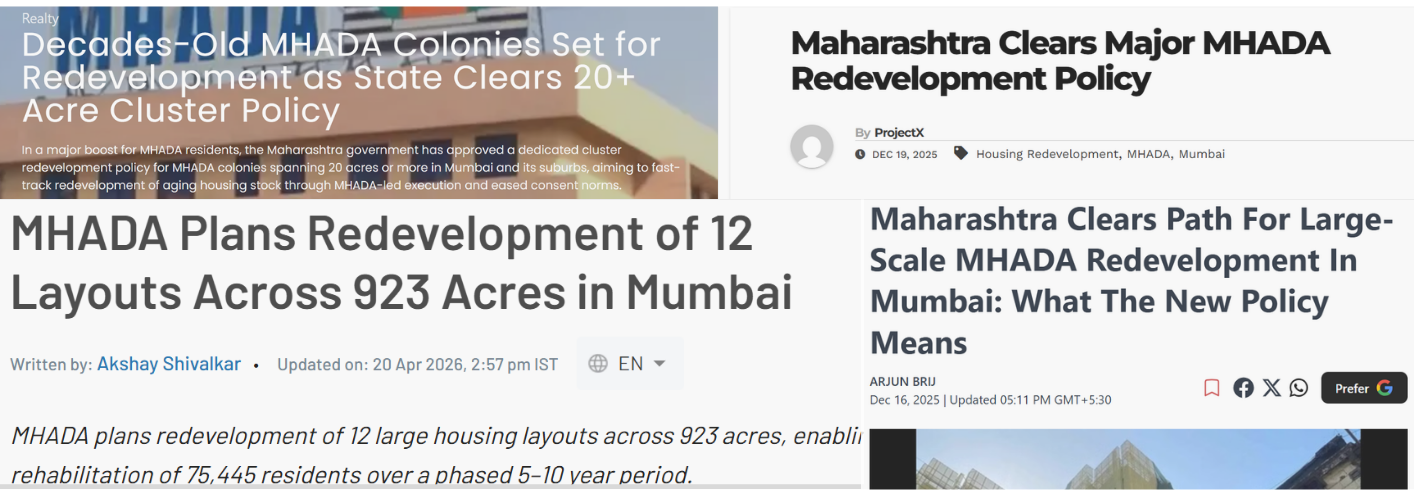
The Maharashtra Housing and Area Development Authority (MHADA) came into existence in 1977 with a single mandate: to plan and develop affordable housing for Mumbai's growing population. Through its Mumbai Board, MHADA undertook the construction of housing layouts across the city, ensuring government-approved homes were accessible to citizens across EWS, LIG, MIG, and HIG income groups.
The results were substantial. In Mumbai alone, MHADA has constructed more than 3 lakh housing units. Colonies like Abhyudaya Nagar, Motilal Nagar, Adarsh Nagar, etc became home to hundreds of thousands of families; a planned, publicly funded response to one of the world's fastest-growing cities.
Decades later, that same housing stock is showing its age. Structures across these layouts are structurally deteriorated and technologically obsolete and the families inside them have nowhere to go. Mumbai is a landlocked city; there is no new land to build on. Redevelopment is not just the most viable option for planning authorities; it is the only one. The city needs more housing stock, ageing buildings need to be replaced and the stock that MHADA built to solve Mumbai's housing problem has itself become a housing problem.
From DCR 1991 to DCPR 2034 — how Regulation 33(5) evolved
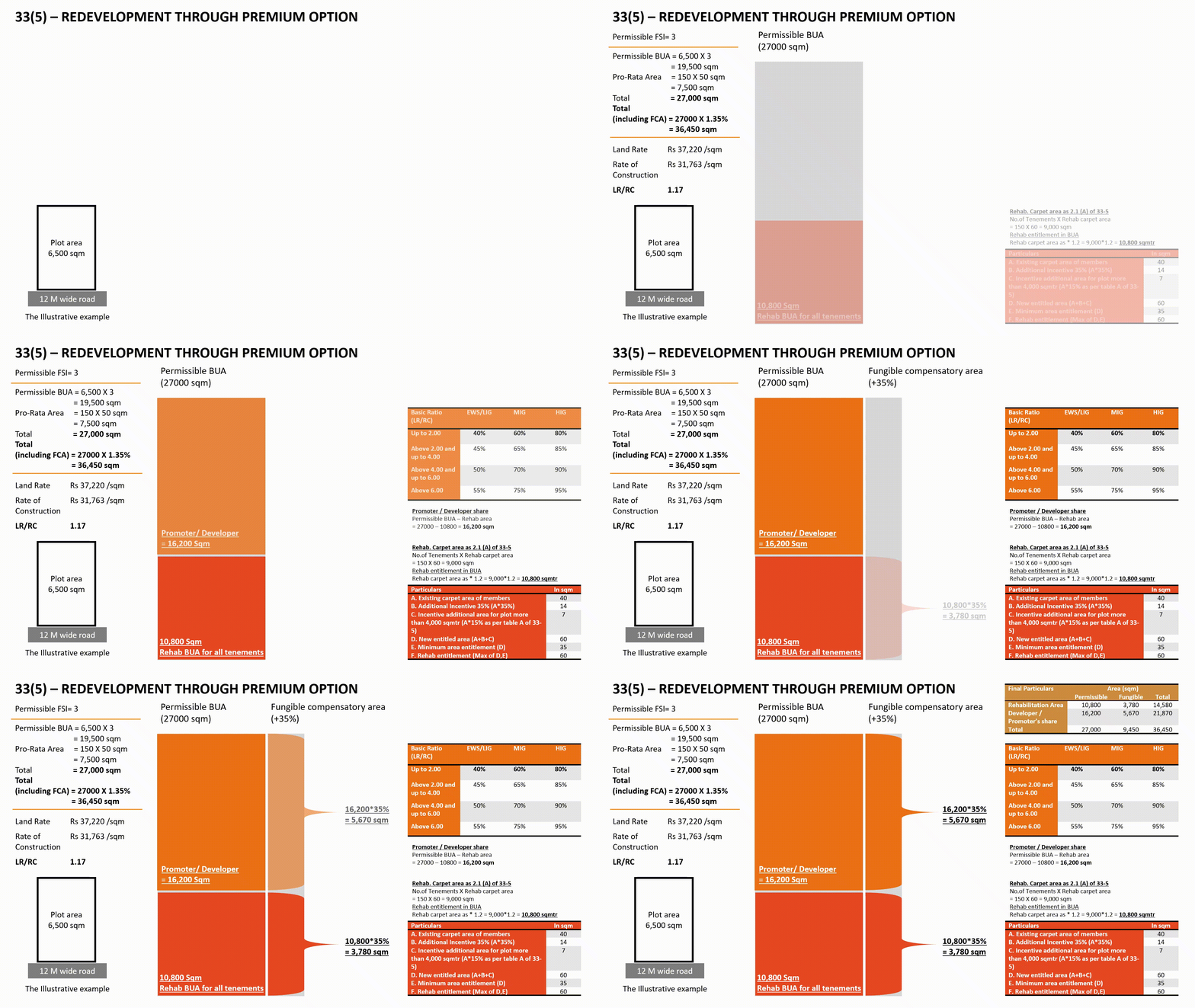
The solution wasn't to abandon the housing stock rather it was to create a framework that made redeveloping it financially viable for societies, developers, and MHADA alike. That framework first appeared as Regulation 33(5) under the Development Control Rules of 1991, when Mumbai's planning regulations were formally codified. At that time, the regulation provided an FSI of 2.5 on the entire layout for MHADA housing scheme redevelopment.
Article quote
Quote Author | 30 August 2026